TBI: Not-So-Mild Damages
The Accident Was Over in Seconds. The Damage Lasted Years.
The crash took less than two seconds. The brain injury it left behind took everything else.
You didn't lose consciousness. The airbag didn't deploy. You walked away from the scene and told the officer you were fine. And you meant it — because in that moment, you were. Or you thought you were.
Three weeks later, you're sitting in a meeting and you can't remember what was just said. You lose your train of thought mid-sentence. You're short-tempered in ways that frighten your family. You wake up with headaches that weren't there before the crash. Your doctor says it might be stress.
It might be a traumatic brain injury.
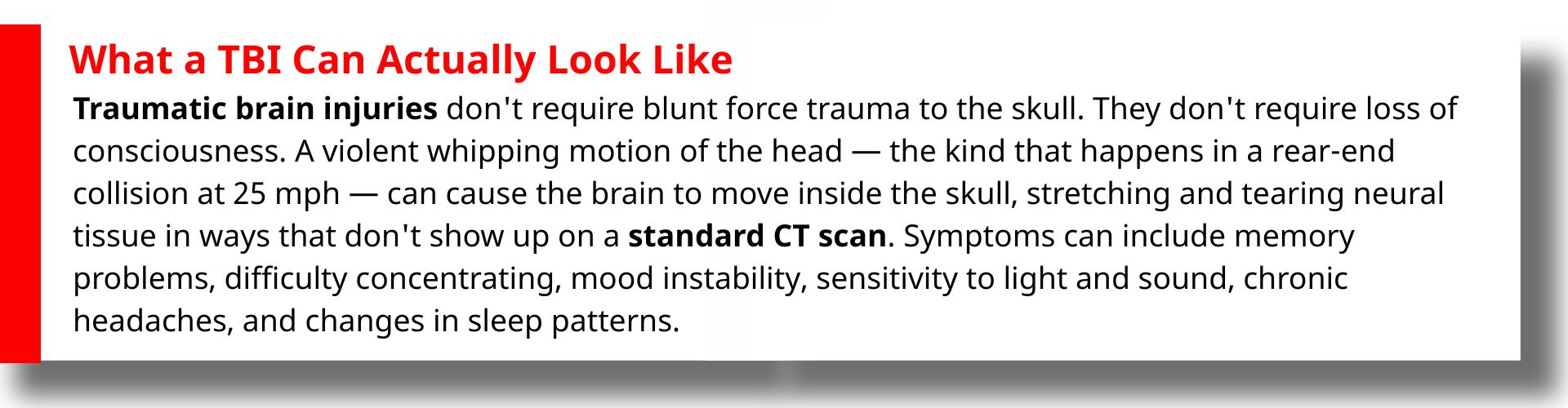
Dr. Michael Sandborn, who appears in Episode 3 of Not Another TV Lawyer, makes one point that every accident victim needs to hear: the absence of visible trauma does not mean the absence of brain injury. The disconnect between what a scan shows and what a patient experiences is one of the most frustrating and misunderstood aspects of TBI — and it's exactly what insurance defense teams exploit.
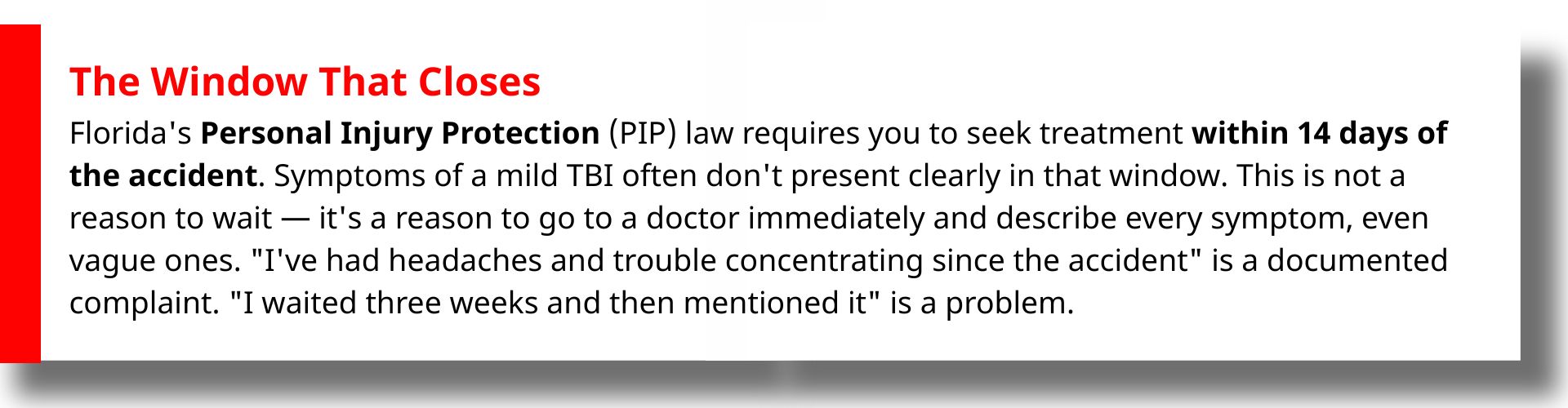
If your symptoms aren't in your medical records, they didn't happen. That is the legal reality. A defense attorney reviewing your file months or years from now will look at what your doctors documented — not what you remember feeling. If you told the ER nurse you felt fine and never followed up, the narrative of your injury begins and ends with that statement.
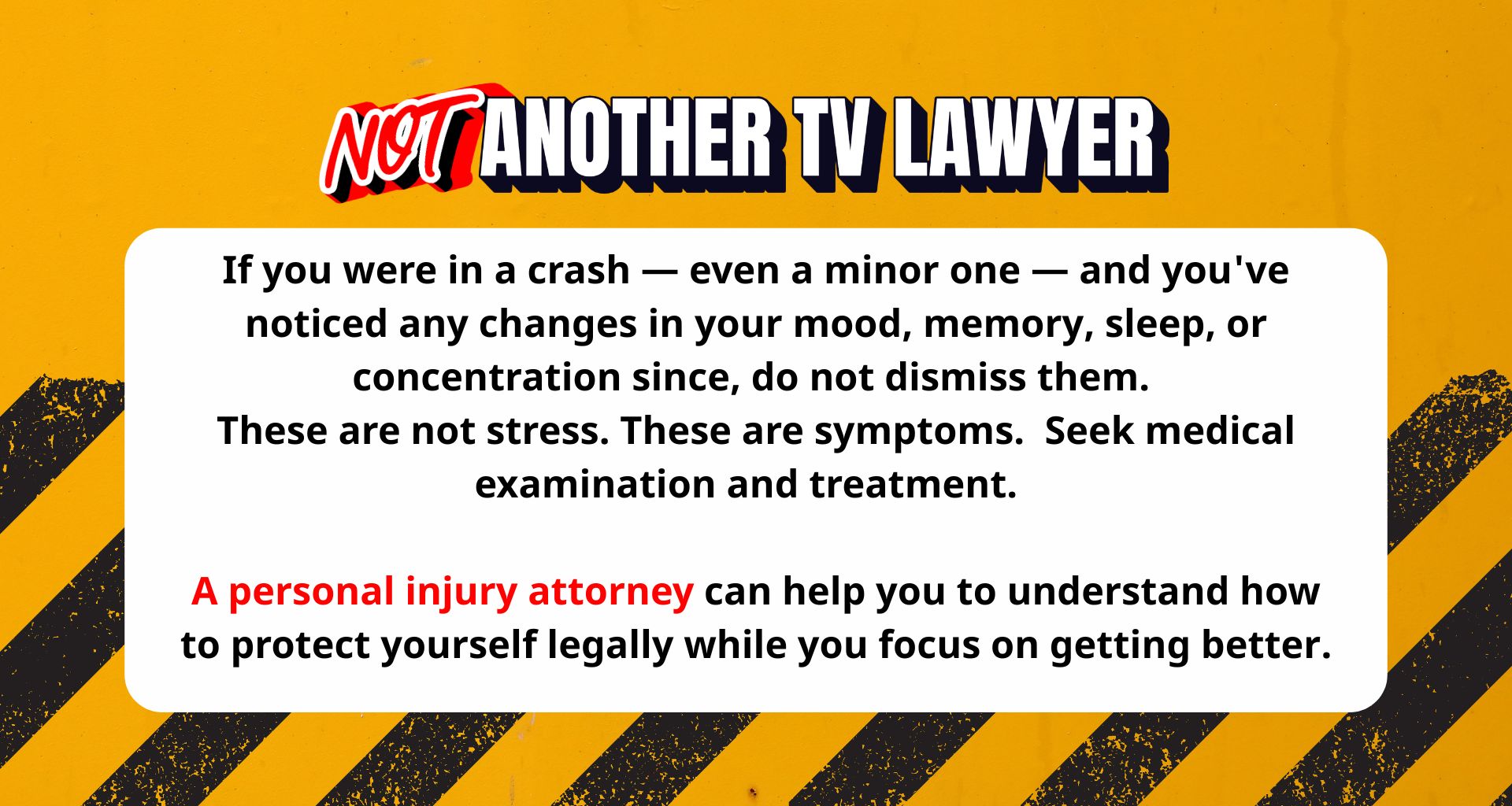
This is why documentation matters immediately. Not because you're building a legal case — but because your body is telling you something happened, and someone needs to write it down. Tell your doctor about the headaches. Tell them about the memory gaps. Tell them about the irritability and the sleep disruption. Every symptom you report creates a medical record. Every medical record becomes evidence.
Contact us or visit our MTSJAX.FM Show Page for more about our podcast
Our Episode Guest:
Dr. Michael Sandborn, M.D. FAAPMR
Trained at Emory University, Dr. Sandborn has dedicated his life’s work to making people feel better. His experience in dealing with pain and traumatic brain injury is rivaled only by his compassion for his patients.
Licensed in Florida and Michigan, Dr. Sandborn specializes in Interventional Pain Management and Regenerative Medicine in his practice,Spine, Brain and Joint Institute in Jacksonville, FL. He is married to his wife, Alyse, for 24 years and they have three adult children. He is an avid mountain biker and sailor.
If you or someone you know is experiencing symptoms of a mild TBI, Dr. Sandborn is available for consultation. You can contact the Spine, Brain and Joint Institute through their website at https://spinebrainjointinstitute.com or call their office at 904-374-3672. Early intervention can make a significant difference in recovery and quality of life.
Episode Notes:
Key areas of discussion include symptom identification, lifestyle changes post-injury, the role of supplements and medications, and the utility of advanced imaging techniques like Diffusion Tensor Imaging (DTI) in the diagnosis and management of TBIs. Dr. Michael Sandborn also emphasizes the importance of specialized care for better patient outcomes.
00:00 Introduction to Not Another TV Lawyer
00:31 Meet Dr. Michael Sandborn
00:55 Understanding Spine, Brain, and Joint Care
01:13 Focus on Pain Management
02:34 Traumatic Brain Injury Insights
04:21 Concussion Awareness and Prevention
07:07 Identifying and Treating Mild TBIs
11:59 Lifestyle Adjustments for Recovery
22:10 Advanced Care for Persistent Symptoms
30:33 Referral and Contact Information
31:54 Conclusion and Sponsor Message