From Impact to Outcome
Welcome to Season 1 Guide:
An Explainer on Auto Accident in Florida
This Season 1 Guide maps out what most Floridians go through after an auto crash and the personal injury questions you’ll want to ask along the way.
Last reviewed for legal changes: February 2026. Florida laws can change.
Season 1: Auto Accidents
SEASON 1 - PODCAST EPISODES + VIDEO MINI-SERIES
The Accident
After the Accident
You survived the crash. But the decisions you make in the next 72 hours, 14 days, and 2 years will determine whether you recover or pay for someone else's mistake with your own money, health, and future.
1 in 5
FLORIDA DRIVERS WHO ARE UNINSURED OR UNDERINSURED
$10,000
FULL AMOUNT OF PERSONAL INJURY PROTECTION BENEFITS IN FLORIDA
14
DAYS TO SEEK EMERGENCY TREATMENT TO AVOID BENEFIT LOSS
2 Years
FLORIDA STATUTE OF LIMITATIONS RELATED TO AUTO ACCIDENTS
Most accident victims don't lose their case in court. They lose it in the days and weeks after the crash by missing deadlines, trusting the wrong people, and not knowing what questions to ask.
Get the Real Scoop From Real Professionals
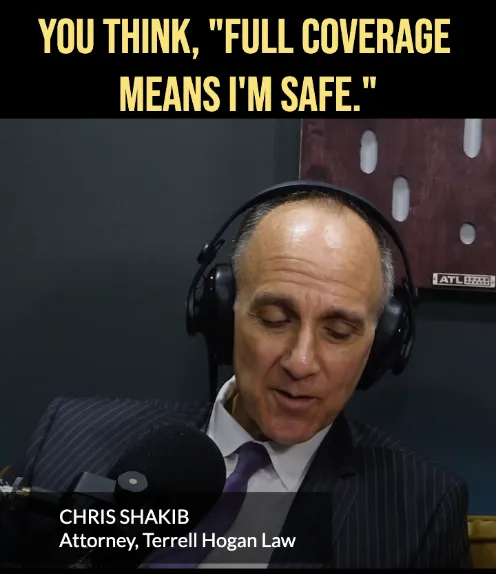
CLIP FROM SEASON 1, EPISODE 1
FEATURED MINI-SERIES: THE ACCIDENT AFTER THE ACCIDENT
The Blind Side of Car Insurance
Think Again. "Full Insurance Coverage" Is A Sales Tactic.
You've been paying your insurance premium every month without fail. When someone asked if you were covered, you said Yes! confidently. You have full coverage. You're protected.
Then the crash happens. And somewhere between the emergency room and the first call from an adjuster, you discover that "full coverage" doesn't actually mean what you thought it meant.
CLIP FROM SEASON 1, EPISODE 3
TBI: Not-So-Mild Damages
You didn't lose consciousness. The airbag didn't deploy. You walked away from the scene and told the officer you were fine. And you meant it, because in that moment, you were. Or you thought you were.
The Best Bang for Your Buck
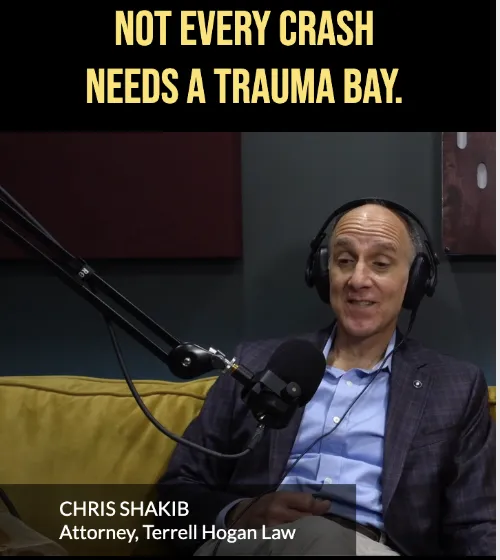
The ER is not always the RIGHT answer.
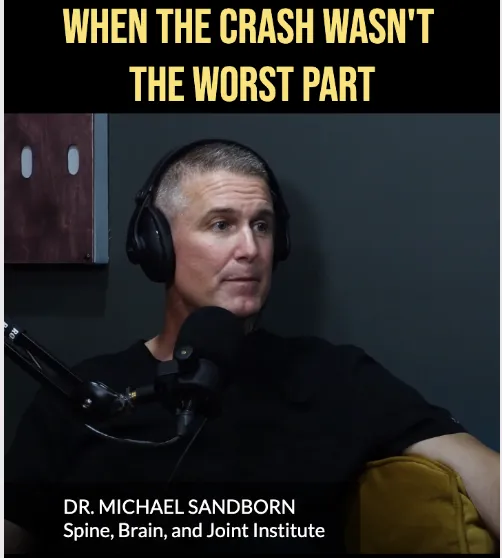
CLIP FROM SEASON 1, EPISODE 9
Going to the emergency room after a car accident makes complete sense. You're scared. You don't know what's wrong. You go where people go when they've been hurt. Nothing about that instinct is wrong.
But here's what the ER does not tell you when they hand you a discharge sheet: the emergency department is designed to rule out life-threatening conditions. It is not designed to treat soft tissue injuries, whiplash, spinal misalignment, or the kind of musculoskeletal damage that develops — and compounds — in the days and weeks following a crash.
CLIP FROM SEASON 1, EPISODE 9
CLIP FROM SEASON 1, EPISODE 4
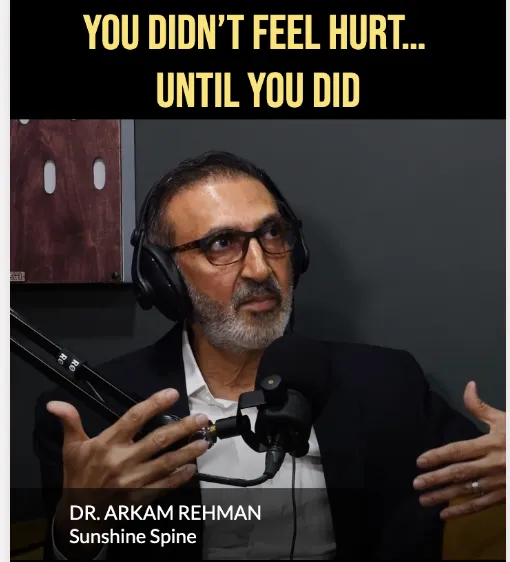
The Delayed Reaction
A car accident may leave you feeling fine until days or sometimes even weeks later. This is not unusual. It is, in fact, a very common pattern in auto accident injury and one of the most commonly used arguments against accident victims by insurance adjusters.
CLIP FROM SEASON 1, EPISODE 6
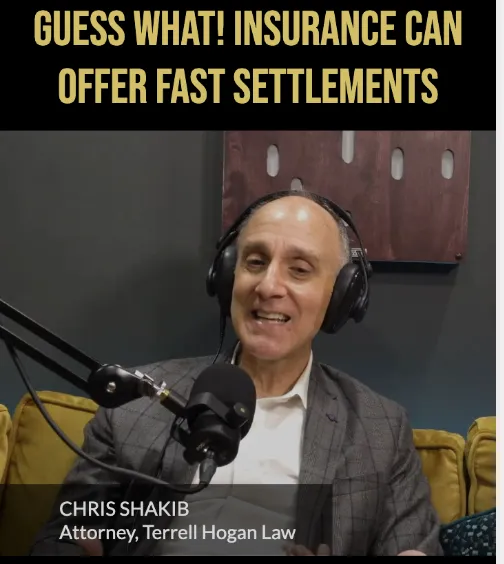
More than a Number
In the days following a serious accident, when you're in pain, dealing with a damaged car, missing work, and trying to manage the administrative chaos that follows a crash, an insurance adjuster calls about your claim.
CLIP FROM SEASON 1, EPISODE 5
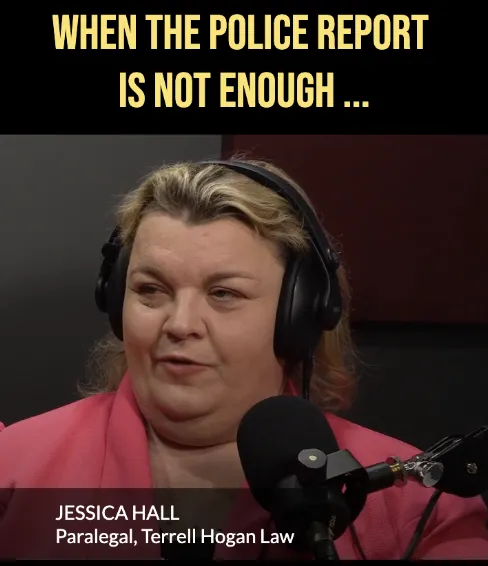
The Back Story Revealed
There's a reason the other driver's insurance company is already disputing fault. It's not because they have better evidence than you. It's because they know that the police report is a starting point, not a final answer. And they're betting you don't know that.
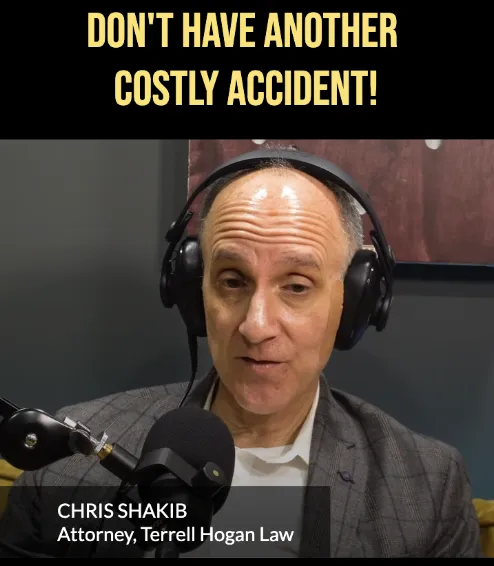
CLIP FROM SEASON 1, EPISODE 10
Avoiding Case File Closures
There is a moment — and you will not know when it happens — when the option to file a lawsuit disappears forever. Not because your injuries weren't real. Not because the other driver wasn't at fault. Not because you don't deserve compensation. But because a legal clock ran out while you were waiting.
CLIP FROM SEASON 1, EPISODE 4
TBI: Not-So-Mild Damages
You didn't lose consciousness. The airbag didn't deploy. You walked away from the scene and told the officer you were fine. And you meant it, because in that moment, you were. Or you thought you were.
CLIP FROM SEASON 1, EPISODE 4
Get The Best Bang for Your Buck
Going to the emergency room after a car accident makes complete sense. You're scared. You don't know what's wrong. You go where people go when they've been hurt. Nothing about that instinct is wrong.
CLIP FROM SEASON 1, EPISODE 4
The Delayed Reaction
A car accident may leave you feeling fine until days or sometimes even weeks later. This is not unusual. It is, in fact, a very common pattern in auto accident injury and one of the most commonly used arguments against accident victims by insurance adjusters.
CLIP FROM SEASON 1, EPISODE 5
The Back Story Revealed
In the days following a serious accident, when you're in pain, dealing with a damaged car, missing work, and trying to manage the administrative chaos that follows a crash, an insurance adjuster calls about your claim.
CLIP FROM SEASON 1, EPISODE 6
Be More than a Number
In the days following a serious accident, when you're in pain, dealing with a damaged car, missing work, and trying to manage the administrative chaos that follows a crash, an insurance adjuster calls about your claim.
CLIP FROM SEASON 1, EPISODE 10
Avoiding Case File Closures
There is a moment — and you will not know when it happens — when the option to file a lawsuit disappears forever. Not because your injuries weren't real. Not because the other driver wasn't at fault. Not because you don't deserve compensation. But because a legal clock ran out while you were waiting.
CLIP FROM SEASON 1, EPISODE 3
TBI: Not-So-Mild Damages
Don't Underestimate Traumatic Brain Injury.
You didn't lose consciousness. The airbag didn't deploy. You walked away from the scene and told the officer you were fine. And you meant it, because in that moment, you were. Or you thought you were.
Three weeks later, you're sitting in a meeting and you can't remember what was just said. You lose your train of thought mid-sentence. You're short-tempered in ways that frighten your family. You wake up with headaches that weren't there before the crash. Your doctor says it might be stress.
In reality, these symptoms might be a traumatic brain injury.
A VIDEO MINI-SERIES: WHEN TRUST IS BLIND
COMING SOON!
Season 1 Guide FAQs
Not every Florida automobile crash turns into a personal injury case. Season 1 of Not Another TV Lawyer provides information to help you better understand the full process, not to give legal advice.
When does a crash become a personal injury case?
In a no-fault state like Florida, fault still comes into consideration, and if someone is hit, their bodily injury coverage protects the other party, while uninsured / underinsured motorist coverage protects them if the at-fault driver lacks sufficient coverage.
The average person often contact a lawyer after visiting a chiropractor or doctor, or upon receiving correspondence from a third-party insurance company. However, Individuals involved in an auto accident, especially with commercial vehicles, should contact an attorney as soon as possible. Florida law presents challenges for auto accident cases, particularly due to the recent passage of HB837 in March 2023, which reduced the statute of limitations for filing a lawsuit from four years to two years.
An attorney can assist with corresponding with insurance companies through a pre-suit demand letter. Commonly recoverable damages include pain and suffering, economic damages such as medical expenses, mileage to appointments, services requiring hired help (e.g., housekeeping), and lost wages.
Auto accident cases with appropriate medical treatment and insurance coverage can typically be resolved within six months to a year through a pre-suite demand. However, a case becomes a lawsuit when a pre-suit demand to the insurance carrier is rejected or undervalued.
How are accidents involving commercial vehicles different than personal vehicles?
Commercial vehicle accidents are significantly different from typical motor vehicle accidents and require immediate attorney involvement. Commercial accidents involve more steps, such as notifying the trucking carrier and insurance company, and sending a preservation letter for data like the black box recordings. Commercial vehicle owners face greater liability due to the drivers having additional training and education.
Who do you represent?
Chris Shakib with Terrell Hogan Law firm exclusively represents plaintiffs who are injured in Florida in auto accidents and other types of personal injury cases such as medical malpractice from cosmetic surgery, plastic surgery and dental implants.
The firm operates on a contingency fee basis, meaning they only receive payment if they win the case. If contacted through our form, you will be contacted by Jessica Hall to set up an initial consultation meeting with Chris Shakib.
Is Season 1 only for people in Florida?
Season 1 is built around Florida law and Florida courts, so details may be different in other states. If you live elsewhere, you may still find the themes and questions helpful, but you’ll want to understand the law and contact an attorney within the state the accident occurred.
Do I have to listen in order?
No. Many listeners jump straight to the episode that matches the stage they’re in, then go back to fill in context. The Season 1 Guide page can help you choose where to start.
Can I send questions for future episodes?
Yes. You can’t get case-specific legal advice through the podcast, but you can absolutely send in general questions you’d like Chris and Jessica to tackle in future seasons. We’ll never discuss your specific case on the show.
For question submissions, email [email protected] or [email protected] with the subject line: Not Another TV Lawyer Podcast Inquiry.
Perspectives on Auto Accidents in Florida From Not Another TV Lawyer
The most common auto accident cases the firm takes are rear-end and T-bone collisions, often caused by distractions and running red lights.
The top reasons legal cases are rejected are lack of insurance coverage (specifically bodily injury coverage) and lack of medical treatment.
The biggest mistakes injured drivers make are not seeking medical treatment within the first 14 days of the crash, and not opening a personal injury protection claim with their own insurance carrier.
Auto accident cases with appropriate medical treatment and insurance coverage can typically be resolved within six months to a year.
Florida-Specific Rules that Shape Your Outcome
Florida’s auto system is primarily no‑fault with a two-year statute of limitations. Personal Injury Protection (PIP) is the first source of recovery and is designed to cover immediate medical bills after a crash regardless of who caused it, but PIP has coverage limits and procedural requirements you must follow. Prompt action is important to preserve your rights.
The 14-Day PIP Rule: Florida Law's Fine Print
Under Florida law, you must seek emergency medical treatment within 14 days of your accident to access the full $10,000 of your Personal Injury Protection (PIP) benefits under your auto insurance coverage. After that window, your benefit can be reduced to $2,500 or less.
NOTE: Emergency medical treatment does not necessarily mean Emergency Room visits. Other facilities and providers can provide the care treatments to satisfy this rule.
Laws vary between states. Auto accidents occurring within the state of Florida are subject to Florida laws and statutes. These laws and statutes are subject to change. If you were in an accident and suffered from personal injury, consult your lawyer to determine the latest laws and statutes your incident is subject to.
Ready for a private conversation?
Does this sound like what you’re going through?
Right after the crash
“I’m not sure if I should call my insurance yet.”
“The other driver admitted fault at the scene; does that matter?”
“I felt okay at first, but now the pain is setting in.”
In the middle of the claim
“The insurance company keeps asking for statements and forms.”
“Medical bills are stacking up and I don’t know who actually pays them.”
“Someone mentioned ‘no-fault’ and PIP, but I’m not sure what that really means.”
Thinking about a lawyer
“I’m not a ‘lawsuit person’ but this doesn’t feel fair.”
“I don’t want to be pressured, I just want to understand my options.”
“What actually changes if I hire a lawyer in Florida?”
Most Florida auto accident stories start with the same knot-in-your-stomach questions.
Recognition is the first step in understanding that you may need to speak with a professional.
Chris Shakib, ESQ. has spent decades fighting for accident victims in Florida. A consultation costs you nothing. Waiting costs you everything.
Reaching out is completely optional. The content here is designed to stand on its own, whether you ever make that call or not.
Not Another TV Lawyer
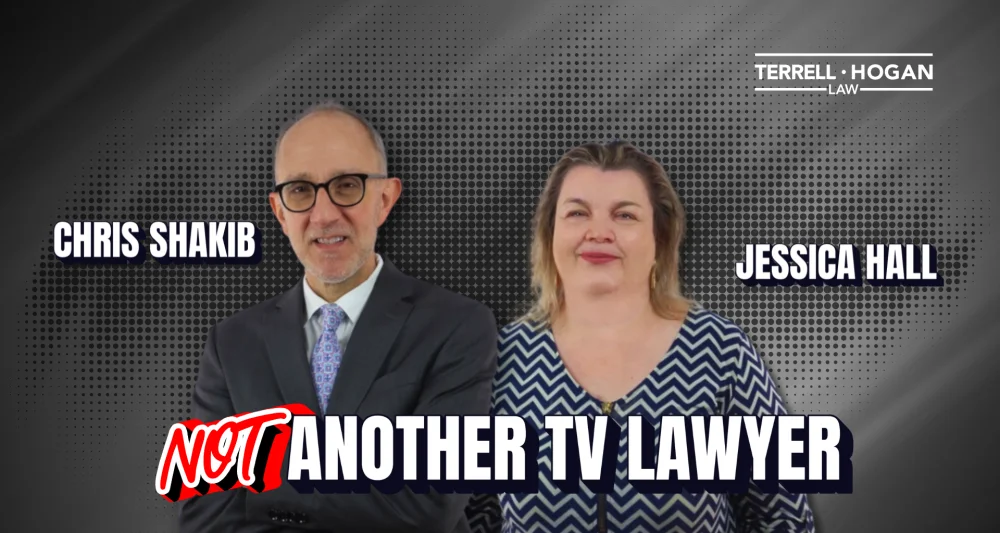
An educational media project by Florida attorney Chris Shakib, ESQ., and paralegal Jessica Hall, J.M., focused on helping Floridians and those injured in Florida understand personal injury law through clear, calm conversations.
Authority and disclosures
Hosted by a Board-Certified Civil Trial Lawyer in Florida
Content reviewed periodically for legal changes (last major update: February 2026)
Episodes are educational only and not legal advice.
Listening to this podcast does not create an attorney-client relationship.
Case outcomes are not guaranteed.
Next steps if you need a lawyer
If you’d like to speak with a lawyer about your situation, you can contact Jessica Hall, J.M., at the Office of Chris Shakib, ESQ. at Terrell Hogan Law directly via email at [email protected]
© 2026 Not Another TV Lawyer. All rights reserved. Florida-specific content.